
CALL 0115 647 0111
Case study: DTL Data Recovery · Website design
A website case study: how we designed, built and host the website for DTL Data Recovery, on Nova CMS.
About the client
DTL Data Recovery is a data recovery laboratory based in Bridgend, South Wales. Its website says it recovers data from hard drives, RAID arrays and servers, SSDs and flash media and laptops, repairs corrupt files, removes lost passwords and securely erases drives, for customers across the UK and Ireland.
The site states that it returns a free evaluation within four hours of receipt, quotes a fixed price, and works on a no data, no fee basis. Those are the business's own claims, and the website is built to put them in front of a visitor straight away.
The person arriving at a data recovery site is usually stressed. A drive has failed, something irreplaceable may be on it, and they want to know three things quickly: can it be recovered, what will it cost, and what do they do next. The site is arranged to answer those in that order.
DPOM designed and built the site, hosts it on its own server and runs it on Nova CMS.
What it needs to do
The site needs to be small, quick and direct. A visitor in a hurry should not have to read a long page to find a phone number, and a hesitant one should find enough proof to pick up the phone.
It also has to explain a technical service in plain language, because most visitors do not know the difference between a logical, electrical or mechanical failure.
What we built
We designed and built the site to be small, fast and direct, on Nova CMS, and host it ourselves.
This also gives each type of recovery a place to be found for, so someone searching for RAID or SSD recovery lands on the right section.
How it performs
Built light, the home page shows its largest content in 0.9 s on a slow phone connection. We measured this ourselves; we have not been given the site's traffic or enquiry figures, so this page does not quote any.
Measured by DPOM on 17 October 2026 with a headless Chromium browser on our own server, on a first visit with our own and third-party tracking blocked, median of three runs. The phone figure is a 390 pixel screen on a slow 4G connection with a CPU four times slower than normal; the desktop figure is a 1440 pixel screen with no throttling.
More websites
Other live websites DPOM designed, built and hosts on Nova CMS. Open one to see what it does.
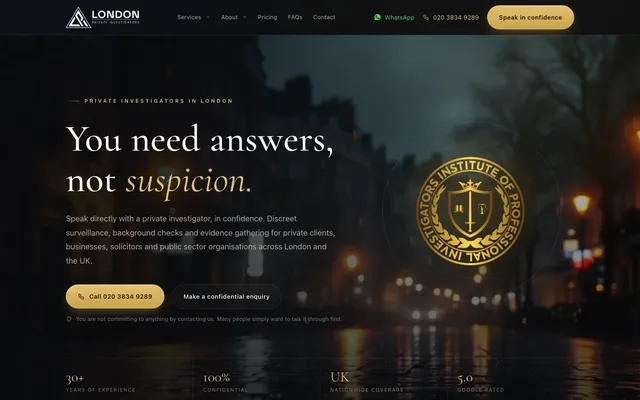
Website design and build
A 50-page website for a London private investigation firm, designed, built and hosted by DPOM on Nova CMS.
Read the case study: London Private Investigators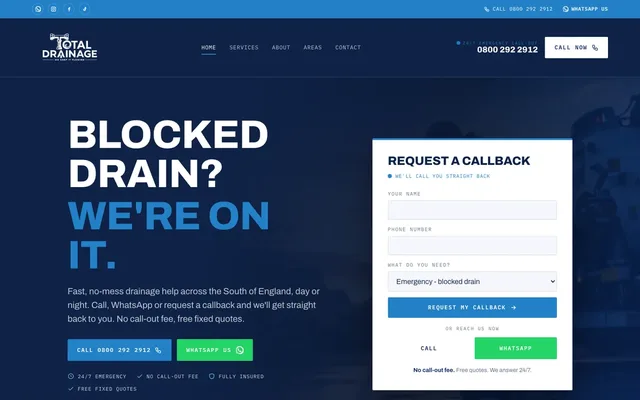
Website design and build
A website for a 24/7 drainage engineer in Dorset, Hampshire and Wiltshire, designed, built and hosted by DPOM on Nova CMS.
Read the case study: Total Drainage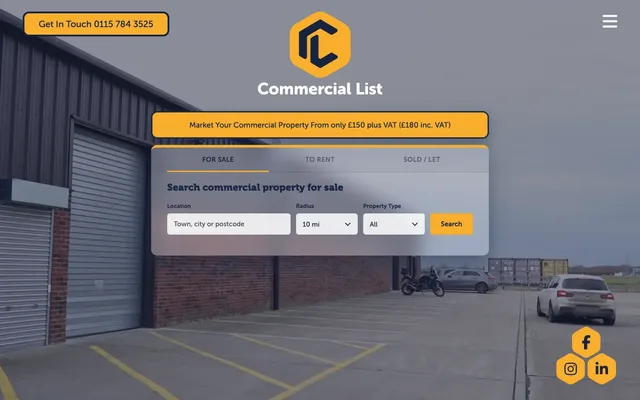
Website design and build
A commercial property website with live listings, a property search and online ordering, built and hosted by DPOM on Nova.
Read the case study: Commercial ListCase study FAQs
It is a six-page website for a data recovery laboratory: a home page, services, about, reviews, contact and a blog, built to put the helpline and the recovery process first.
DPOM designed and built it, and hosts it on our own server. It runs on Nova CMS, so the business can edit its own text, images and menus from the page itself.
Built light, the home page shows its largest content in 0.9 s on a slow phone connection. Measured by DPOM on 17 October 2026 with a headless Chromium browser on our own server, on a first visit with our own and third-party tracking blocked, median of three runs. The phone figure is a 390 pixel screen on a slow 4G connection with a CPU four times slower than normal; the desktop figure is a 1440 pixel screen with no throttling.
We can, and we can show you before you commit. Use the Free homepage concept tab in the form at the top of this page, or call 0115 647 0111.
Get started
The quickest way is a call. Tell us about your business and we will tell you honestly what we would build and what it would cost.
Call our UK website team0115 647 0111